February 15, 2026
Turkish Baklava vs. Baku Baklava
Turkish Baklava vs. Baku Baklava: What’s the Real Difference?
Baklava exists across many cultures, but the versions from Turkey and Azerbaijan are often confused. They share a name, but not the same identity.
Ingredients and structure
Turkish baklava is defined by very thin phyllo layers, generous butter, and a heavy use of pistachio or walnut. It’s delicate, glossy, and syrup-forward.
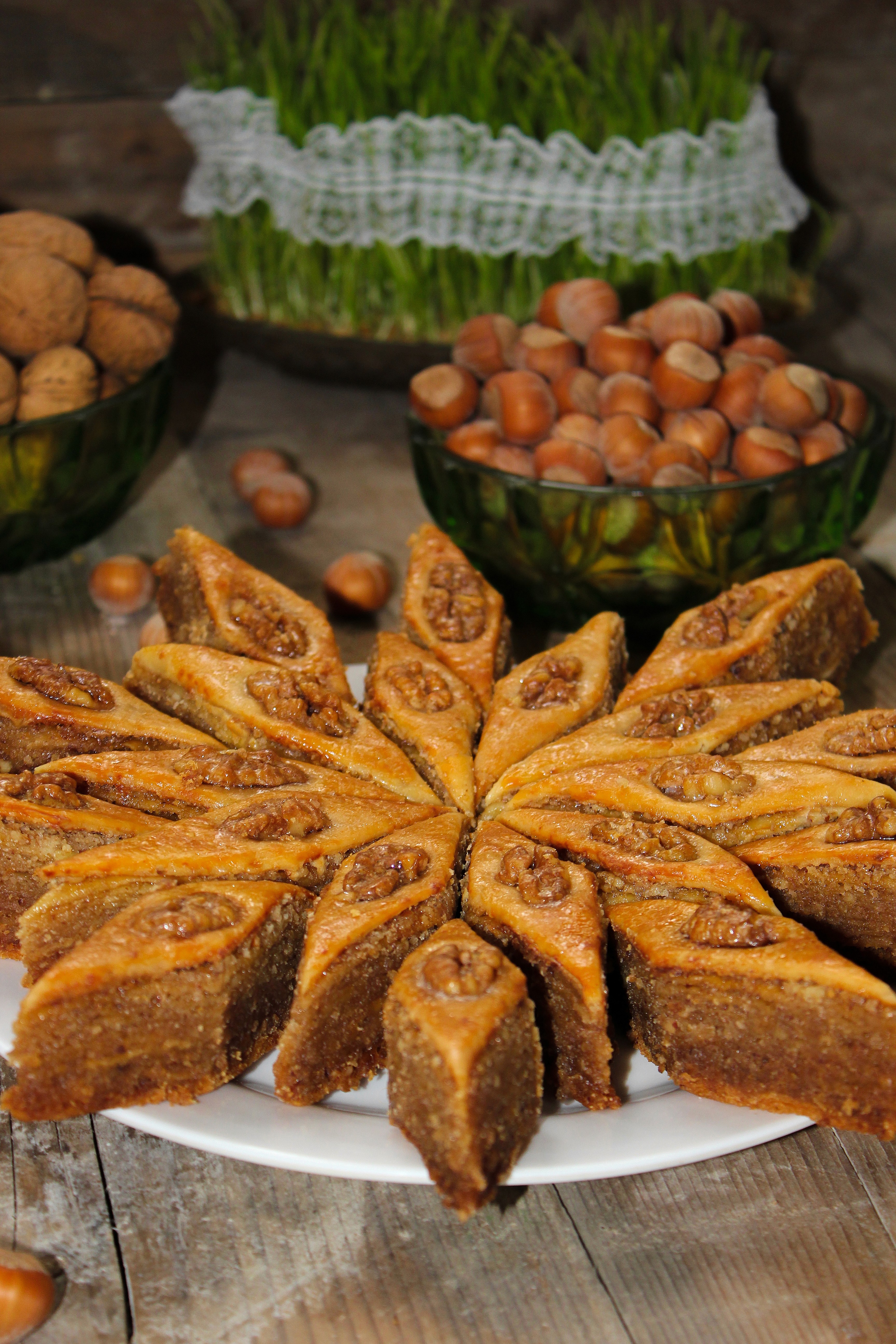
Baku baklava is thicker and more structured. The layers are fewer but richer, often made with a yeast-based dough rather than ultra-thin phyllo. The filling usually includes walnuts, sometimes spices, and the top is traditionally finished with a patterned cut and nuts placed at the center.
Sweetness and texture
Turkish baklava is sweeter and softer, soaked evenly in syrup. It melts quickly and feels luxurious.
Baku baklava is more balanced. Still sweet, but heavier, slightly drier, and more filling. It’s meant to be eaten slowly, often with tea, not as a quick dessert.
How it’s eaten
In Turkey, baklava is often a standalone dessert. One or two pieces are enough.
In Azerbaijan, baklava is part of a larger table. It appears during holidays, family gatherings, and long tea sessions. It’s less about indulgence, more about sharing.
Why the difference matters
Neither version is better. They simply reflect different food cultures. One celebrates refinement and finesse, the other comfort and tradition. At Merci Baku, Baku baklava isn’t presented as an alternative. It’s presented as itself.
Same name. Different rhythm.